Introduction
Starting an online business is easier than ever, but choosing the right platform can be overwhelming. One of the most common questions business owners ask is, “Should I build my website on WordPress or Shopify?”
Both platforms are popular, powerful, and trusted by millions of businesses worldwide. However, they are designed with different goals in mind. While WordPress offers unmatched flexibility and customization, Shopify focuses on providing an easy-to-use ecommerce solution that helps businesses start selling online quickly.
Choosing the wrong platform can lead to unnecessary expenses, limited scalability, and challenges as your business grows. On the other hand, selecting the right platform can improve your website’s performance, enhance customer experience, boost search engine rankings, and support long-term business growth.
Whether you’re a startup, retailer, restaurant, manufacturer, or ecommerce entrepreneur in Chennai, Tuticorin, Tamil Nadu, or anywhere in South India, understanding the strengths and limitations of each platform is essential before making your investment.
In this comprehensive guide, we’ll compare WordPress and Shopify across key factors such as ease of use, pricing, customization, SEO, security, performance, scalability, and business suitability. By the end, you’ll have a clear understanding of which platform aligns best with your goals.
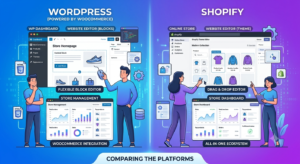
What Is WordPress?
WordPress is the world’s most popular Content Management System (CMS), powering more than 40% of websites globally. It allows businesses to create everything from simple blogs to advanced ecommerce stores and enterprise websites.
With the addition of WooCommerce, WordPress becomes a fully functional ecommerce platform capable of supporting businesses of all sizes. One of WordPress’s biggest strengths is its flexibility. You have complete control over your website’s design, functionality, hosting, and SEO.
Key Features of WordPress
-
- Highly customizable
- Thousands of themes and plugins
- WooCommerce integration
- Excellent SEO capabilities
- Blogging functionality
- Multi-language support
- Scalable architecture
- Large developer community
WordPress is suitable for:
- Small businesses
- Corporate websites
- Ecommerce stores
- Educational institutions
- Healthcare providers
- Service businesses
- Manufacturers
- Startups
- Blogs and news websites
What Is Shopify?
Shopify is a cloud-based ecommerce platform built specifically for selling products online. Unlike WordPress, Shopify provides an all-in-one solution that includes hosting, security, payment processing, and store management. Business owners can launch an online store without worrying about server management or software updates.
Key Features of Shopify
- Fully hosted platform
- Built-in ecommerce tools
- Secure payment gateways
- Inventory management
- Order management
- Mobile-friendly themes
- Built-in analytics
- App marketplace
Shopify is ideal for:
- Online retailers
- Dropshipping businesses
- Product-based startups
- Fashion brands
- Beauty brands
- Electronics stores
- Small ecommerce businesses
Why Is Choosing the Right Platform Important?
Your website platform is the foundation of your online business. It affects not only how your website looks but also how efficiently it performs, how easily it can grow, and how well it supports your marketing efforts.
Choosing the right platform impacts:
- Website speed
- Search engine rankings
- Customer experience
- Online sales
- Maintenance costs
- Scalability
- Security
- Future integrations
A platform that works well for a small online store today may not meet the needs of a rapidly growing business tomorrow. That’s why it’s important to think beyond your immediate requirements.
WordPress vs Shopify: Side-by-Side Comparison
Ease of Use
WordPress
WordPress offers a user-friendly interface, but beginners may need some time to understand themes, plugins, hosting, and website management.
It provides greater flexibility but comes with a slightly steeper learning curve.
Shopify
Shopify is designed for simplicity.
Everything from product management to payment setup is handled through an intuitive dashboard, making it ideal for users with little technical experience.
Winner: Shopify (for beginners)
Customization
WordPress
WordPress offers virtually unlimited customization.
Developers can build unique websites using custom themes, plugins, and integrations.
Businesses that require specialized functionality often prefer WordPress because there are very few limitations.
Shopify
Shopify offers professionally designed themes and apps, but customization is generally more limited unless you use Shopify’s development tools or higher-tier plans.
Winner: WordPress
Ecommerce Features
WordPress
With WooCommerce, WordPress supports:
- Unlimited products
- Product variations
- Multiple payment gateways
- Subscription products
- Membership websites
- Digital downloads
- Marketplace functionality
Shopify
Shopify includes ecommerce features out of the box, including:
- Inventory management
- Secure checkout
- Shipping management
- Tax calculations
- Product management
- Order tracking
For businesses that want a quick ecommerce setup, Shopify offers a smoother experience.
Winner: Shopify (ease of setup)
SEO Capabilities
SEO is one of the most important factors when choosing a website platform.
WordPress
WordPress is widely regarded as one of the best platforms for SEO.
It allows complete control over:
- URL structure
- Meta titles
- Meta descriptions
- Schema markup
- XML sitemaps
- Internal linking
- Image optimization
- Blog content
Plugins such as Yoast SEO and Rank Math make optimization straightforward.
Shopify
Shopify includes built-in SEO features, but certain technical limitations—such as less flexible URL structures and fewer advanced customization options—can make it less adaptable than WordPress for complex SEO strategies.
For businesses focused on content marketing and long-term organic growth, WordPress generally provides greater flexibility.
Winner: WordPress

Common Problems Businesses Face
Choosing the wrong platform can create unnecessary challenges as your business evolves.
Some of the most common issues include:
Problem 1: Limited Customization
Businesses often realize they need features that their chosen platform doesn’t easily support, resulting in additional costs or workarounds.
Problem 2: Growing Monthly Costs
While Shopify has predictable pricing, businesses may incur additional expenses for premium themes, apps, and transaction fees.
Problem 3: Difficult Content Marketing
Some businesses rely heavily on blogging and educational content to attract customers. Platforms with limited content management capabilities can make SEO more difficult.
Problem 4: Scaling Challenges
As businesses expand, they may require advanced integrations with CRM systems, ERP software, AI tools, or custom workflows. Choosing a platform without considering future requirements can result in costly migrations.
Problem 5: Vendor Dependency
Hosted platforms simplify management but may offer less flexibility and greater dependence on the platform’s ecosystem compared to self-hosted solutions like WordPress.
How to Solve These Problems
The right platform depends on your business model, budget, technical requirements, and long-term goals. Instead of asking, “Which platform is better?”, ask, “Which platform is better for my business?”
Let’s explore practical solutions for different scenarios.
Solution 1: Choose WordPress If You Want Complete Control
WordPress is the ideal platform for businesses that want flexibility, scalability, and full ownership of their website. It allows you to customize almost every aspect of your website, making it suitable for businesses with unique requirements.
Choose WordPress if you:
- Want a highly customized website
- Plan to publish blogs regularly
- Focus heavily on SEO and content marketing
- Need custom integrations
- Want full control over hosting and performance
- Expect your website to grow over time
Business Scenario
A manufacturing company in Chennai wants a corporate website with product catalogs, case studies, blog articles, downloadable brochures, inquiry forms, and multilingual support.
WordPress is an excellent choice because it combines content management with powerful SEO capabilities and can scale as the business grows.
Solution 2: Choose Shopify If Your Main Goal Is Selling Products Quickly
If your primary objective is launching an online store with minimal setup, Shopify offers a streamlined ecommerce experience. It’s designed specifically for online retail, allowing you to start selling without worrying about hosting, updates, or technical maintenance.
Choose Shopify if you:
- Need a quick ecommerce launch
- Sell physical products
- Prefer an all-in-one solution
- Don’t want to manage hosting
- Have limited technical knowledge
Business Scenario
A fashion startup in Tamil Nadu wants to launch an online clothing store within a few weeks.
With Shopify, they can:
- Add products
- Configure payment gateways
- Manage inventory
- Process orders
- Track sales
all from a single dashboard.
Solution 3: Consider WooCommerce for Flexible Ecommerce
WooCommerce combines the flexibility of WordPress with powerful ecommerce functionality.
It is suitable for businesses that need:
- Customized product pages
- Advanced SEO
- Blogging
- Memberships
- Subscription products
- Custom checkout experiences
- Third-party integrations
WooCommerce is especially beneficial for businesses planning long-term growth through content marketing and organic search traffic.
Solution 4: Think Beyond Today’s Requirements
Many businesses choose a platform based only on current needs and later discover it doesn’t support future expansion.
Before making your decision, ask yourself:
- Will I add more products in the future?
- Do I plan to publish educational blogs?
- Will I need multilingual support?
- Do I want customer accounts?
- Will I integrate CRM or ERP software?
- Am I planning to launch a mobile app?
- Will AI-powered features benefit my business?
Choosing a scalable platform from the start helps avoid expensive migrations later.
Solution 5: Build SEO Into Your Website from Day One
Regardless of whether you choose WordPress or Shopify, SEO should be part of your website strategy from the beginning.
Focus on:
- Keyword research
- Optimized page titles
- Compelling meta descriptions
- Fast page loading speed
- Mobile-friendly design
- Internal linking
- Image optimization
- High-quality content
- Schema markup
- Technical SEO
Businesses in Chennai, Tuticorin, Tamil Nadu, and across South India can further improve visibility by combining website optimization with Local SEO strategies.

Business Benefits
Selecting the right website platform has a direct impact on your business performance and digital growth.
Better Customer Experience
A well-designed website helps visitors easily browse products, read content, make purchases, and contact your business. Improved usability often leads to higher customer satisfaction and increased conversions.
Stronger SEO Performance
Search engine optimization is easier when your website supports clean URLs, structured content, optimized metadata, and regular content publishing.
Businesses that invest in SEO from the beginning typically experience more sustainable organic traffic.
Easier Website Management
Modern platforms simplify tasks such as:
- Updating pages
- Adding products
- Publishing blogs
- Managing users
- Tracking orders
- Monitoring website performance
This allows business owners to focus more on growth and less on technical maintenance.
Greater Scalability
As your business expands, your website should support:
- New products
- Additional locations
- Customer portals
- Online bookings
- AI-powered automation
- Mobile applications
Choosing the right platform makes future expansion much easier.
Improved Return on Investment
A scalable, SEO-friendly website reduces redevelopment costs and supports long-term digital marketing efforts, making it a valuable business asset.
Best Practices
To maximize the value of your website, follow these proven best practices regardless of the platform you choose.
Focus on User Experience
Make your website:
- Fast
- Mobile responsive
- Easy to navigate
- Accessible
- Visually appealing
Visitors should be able to find what they need without confusion.
Publish High-Quality Content
Content remains one of the strongest drivers of SEO success.
Regularly publish:
- Blog articles
- Case studies
- Product guides
- Industry insights
- Customer success stories
- FAQs
This helps establish authority and attract organic traffic.
Optimize for Performance
Improve website speed by:
- Compressing images
- Reducing unnecessary scripts
- Using caching
- Selecting reliable hosting
- Monitoring Core Web Vitals
Prioritize Security
Protect customer data by implementing:
- HTTPS
- SSL certificates
- Strong authentication
- Regular software updates
- Automated backups
Security builds customer trust and protects your business.
Track Website Performance
Use analytics tools to measure:
- Traffic
- Conversions
- User behavior
- Bounce rate
- Sales
- Search performance
Data-driven decisions lead to better marketing outcomes.
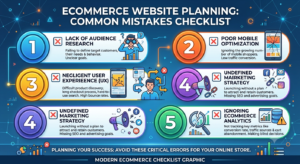
Common Mistakes to Avoid
Avoid these common pitfalls when choosing between WordPress and Shopify:
- Selecting a platform based only on price
- Ignoring future business growth
- Neglecting SEO during website development
- Choosing design over functionality
- Installing unnecessary plugins or apps
- Forgetting mobile optimization
- Publishing thin or duplicate content
- Ignoring website speed
- Not planning for integrations
- Overlooking ongoing maintenance
Your website should evolve alongside your business. Planning ahead helps avoid costly redesigns and platform migrations.
Expert Tips from DigiMaraa Technologies
At DigiMaraa Technologies, we believe there isn’t a universal winner between WordPress and Shopify. The right choice depends entirely on your business objectives.
From our experience working with businesses across industries:
- A restaurant benefits from WordPress with online reservations and local SEO.
- A content-driven service business often performs better with WordPress because of its blogging and SEO flexibility.
- A startup launching a simple online store may benefit from Shopify’s ease of use.
- A growing ecommerce brand requiring advanced customization typically benefits from WooCommerce or a custom-built solution.
- Enterprises needing business automation, ERP integration, or AI-powered functionality often require custom software development using technologies such as the MERN Stack.
Before recommending a platform, we evaluate:
- Business goals
- Growth plans
- Budget
- Target audience
- SEO strategy
- Required integrations
- Scalability requirements
This ensures every website supports long-term business success rather than simply meeting short-term needs.
DigiMaraa Technologies offers comprehensive digital solutions including:
- Website Development
- WordPress Development
- Software Development
- MERN Stack Development
- Ecommerce Website Development
- SEO Services
- Local SEO
- Google Ads
- Social Media Marketing
- UI/UX Design
- Branding
- Graphic Design
- AI Solutions
- Mobile App Development
- Digital Transformation Solutions
By combining modern technology with proven digital marketing strategies, we help businesses create websites that not only look professional but also generate measurable business results.
Frequently Asked Questions
1. Which is better for SEO: WordPress or Shopify?
Both platforms can rank well on Google when implemented correctly. However, WordPress generally provides greater SEO flexibility because it allows complete control over technical SEO, URL structures, schema markup, internal linking, and content optimization. For businesses planning to invest heavily in content marketing and long-term organic growth, WordPress is often the preferred choice.
2. Is Shopify easier to use than WordPress?
Yes. Shopify is designed to simplify ecommerce management, making it easier for beginners to set up an online store, manage products, process payments, and handle orders. WordPress offers more flexibility but requires a slightly steeper learning curve, especially when managing hosting, plugins, and updates.
3. Can I build an ecommerce website with WordPress?
Absolutely. By using WooCommerce, WordPress becomes a powerful ecommerce platform capable of supporting:
- Physical products
- Digital downloads
- Subscription services
- Membership websites
- Multi-vendor marketplaces
- Customized checkout experiences
It is an excellent option for businesses seeking complete control over their online store.
4. Which platform is more affordable?
The total cost depends on your business needs. WordPress itself is free, but you’ll typically need to pay for hosting, a domain, premium themes or plugins, and occasional maintenance.
Shopify operates on a subscription model that includes hosting and core ecommerce features. Additional costs may arise from premium apps, themes, and transaction fees. For simple online stores, Shopify offers predictable pricing. For businesses that require advanced customization, WordPress can provide better long-term value.
5. Which platform is better for small businesses?
It depends on your goals.
Choose WordPress if you need:
- A business website with blogs
- Strong SEO capabilities
- High customization
- Long-term scalability
- Custom integrations
Choose Shopify if you need:
- A quick ecommerce setup
- Minimal technical maintenance
- Built-in selling tools
- A straightforward online store
6. Can I migrate from Shopify to WordPress or vice versa?
Yes. Businesses often migrate between platforms as their requirements evolve. However, website migration should be carefully planned to preserve:
- SEO rankings
- URLs
- Product data
- Customer information
- Search engine indexing
- Website performance
Professional migration helps minimize downtime and protects your organic traffic.
7. Is WordPress secure?
Yes, when properly maintained.
Website security depends on:
- Regular updates
- Strong passwords
- Trusted plugins
- Secure hosting
- SSL certificates
- Routine backups
A well-maintained WordPress website can be highly secure and reliable.
8. How can DigiMaraa Technologies help me choose the right platform?
DigiMaraa Technologies evaluates your business objectives, target audience, budget, future growth plans, and digital marketing strategy before recommending the most suitable platform.
Whether you need a WordPress website, a Shopify store, a custom MERN Stack application, or a complete digital transformation solution, our team focuses on building scalable, SEO-friendly websites that support sustainable business growth.

Conclusion
Choosing between WordPress and Shopify is one of the most important decisions you’ll make when building your online presence. While both platforms are capable of supporting successful businesses, they are designed for different purposes and offer distinct advantages.
If your priority is flexibility, content marketing, SEO, and complete customization, WordPress is a powerful long-term solution. It gives you full control over your website and can grow alongside your business, making it ideal for companies that want to invest in organic search visibility and custom functionality.
If your goal is to launch an online store quickly with minimal technical management, Shopify offers a streamlined, user-friendly ecommerce experience. Its built-in tools make it an attractive option for entrepreneurs who want to start selling online without handling hosting or server maintenance.
Before making your decision, consider:
- Your current business model
- Long-term growth plans
- Marketing strategy
- Technical requirements
- Budget
- Need for customization
- SEO objectives
Businesses in Chennai, Tuticorin, Tamil Nadu, and across South India should also think about local search visibility, customer experience, and future digital expansion when selecting a platform.
Rather than choosing based on popularity, select the platform that aligns with your business goals today while supporting where you want your business to be tomorrow.
For additional guidance and best practices, consider referring to these trusted resources:
- Google Search Central
- Google Business Profile
- Google Analytics
- Google Ads
These platforms provide valuable insights into search optimization, website performance, local visibility, and digital marketing.
A successful website is more than an online storefront
A website is a strategic business tool that helps attract customers, generate leads, increase sales, and build long-term brand credibility.
At DigiMaraa Technologies, we help businesses choose and build the right digital solution based on their unique goals, industry, and growth strategy. Whether you need a content-rich WordPress website, a high-performing Shopify store, or a fully customized software solution, our team is committed to delivering websites that combine performance, scalability, and exceptional user experience.
Our expertise includes:
- Website Development
- WordPress Development
- Software Development
- MERN Stack Development
- Ecommerce Website Development
- SEO Services
- Local SEO
- Google Ads Management
- Social Media Marketing
- UI/UX Design
- Branding
- Graphic Design
- AI Solutions
- Mobile App Development
- Digital Transformation Solutions
If you’re ready to build a website that supports your business today and scales with your future ambitions, connect with DigiMaraa Technologies. We’ll help you choose the right platform, implement best practices, and create a digital presence that drives measurable results.